
Proper energy intake often determines whether you can maintain your pace, concentration and stable performance all the way to the finish. Especially during longer exercise, simply eating or drinking something is not enough. Your body needs water, sodium and carbohydrates in the right proportions – and in certain situations caffeine or taurine can also be used strategically.
This overview clearly explains when carbohydrate intake makes sense, how to estimate the right amount per hour, and what to watch out for when using caffeine and taurine.
The essential basics
The “fuel” supplied to the body during physical activity can generally be divided into three main areas:
For hydration and the basic replenishment of fluids in the body.
For hydration, electrolyte balance and replacing sodium lost through sweat.
As a source of energy during longer sessions, training and races.
Stimulants can also be used during activity to provide targeted support for athletic performance.
A natural stimulant of the central nervous system. It increases alertness, supports concentration, reduces perceived fatigue and may reduce the perception of muscular pain.
An amino acid derivative with several biological functions. Taurine supports muscular and cardiac function and may work synergistically when combined with caffeine.
These include natural extracts and drinks such as guarana, green tea and other similar natural sources.
1. Duration and intensity of the activity
Every physical activity has two basic factors: time and intensity. This includes sport, training, hiking or racing without long breaks.
When planning carbohydrate intake, time is the most important factor. It also often influences intensity, especially in endurance sports.
A 200-metre sprint can be performed at almost maximum intensity, while a marathon cannot. The higher the intensity, the smaller the amount of carbohydrates the body is generally able to process during that period.
During activities lasting approximately up to 1.5 hours, carbohydrate intake is not always essential. A healthy person will usually have sufficient glycogen stores for roughly 90 minutes of activity at varying intensity. Some sources indicate up to 120 minutes.
During shorter activities, stimulants may be used to provide targeted performance support.
For activities lasting longer than 1.5 hours, carbohydrate intake makes sense in order to stabilise energy availability, maintain performance for longer and support recovery.
2. Dosage
Carbohydrate dosing is individual. That may not sound like the simple answer people want to hear, but specific numbers can provide a very useful starting point.
Before activity
Shortly before activity, ideally 20 to 30 minutes beforehand, you can provide the body with a targeted dose of energy.
Approximately 25 to 50 g of carbohydrates is recommended, with an optional 100 to 200 mg of caffeine or taurine, ideally in the form of an IONTMAX hydrogel.
You can learn why hydrogels may be a significantly better form of “fuel” than traditional sports gels here. After that, you may not want to go back to traditional sports gels.
Stimulants such as caffeine or taurine are particularly useful for shorter endurance races lasting approximately up to 4 to 5 hours. Start with 100 mg of caffeine and, if appropriate, later test 200 mg. People who regularly drink around three or more cups of coffee per day may start directly with 200 mg. This corresponds to the generally accepted maximum safe single dose.
Regular use of caffeine or taurine during routine training is generally not recommended, as it may contribute to tolerance and reduce the desired effect during a race.
During activity
The minimum recommended carbohydrate intake is approximately 60 g per hour. Advanced athletes may consume 90 to 120 g per hour. Some sources indicate up to 140 g per hour, but for most athletes 90 g per hour is a safe and realistic target.
The amount of carbohydrates the body can process during exercise can be trained progressively. This works best when you consistently use the same “fuel” during key training sessions and in conditions similar to those of the race.
Optimal “fuel” uses a suitable glucose-to-fructose ratio of 1 : 0.8, a neutral pH and a low glycaemic index – just like IONTMAX hydrogels.
You can learn more about the benefits compared with traditional gels here. More information about carbohydrate absorption is also available in this article.
Where should you start?
A simple guideline is body weight: approximately 1 g of carbohydrates per kilogram of body weight per hour. Example: 75 kg of body weight = 75 g of carbohydrates per hour.
You can then gradually increase the amount and identify your personal limit. Excessive carbohydrate intake during exercise may cause bloating, nausea or other gastrointestinal discomfort.
3. Caffeine
Caffeine is particularly useful during races. It is a natural stimulant that can noticeably increase alertness. At the same time, it may reduce the perception of muscular pain and overall fatigue.
| Situation | Recommended strategy |
|---|---|
| Races up to 5 hours | Take 100 to 200 mg of caffeine 20 to 30 minutes before the start. Then use approximately 100 mg per hour during the race. In critical situations, the dose may be increased to as much as 200 mg per hour. |
| Races longer than 5 hours | Delay caffeine for as long as possible, ideally until the final 5 to 6 hours before the finish. |
| Ultra-endurance exercise | Use caffeine only at critical moments, during extreme fatigue or at longer intervals, for example 100 to 200 mg every 5 to 6 hours. |
This strategy may help limit excessive stimulation, metabolic adaptation and nervous-system fatigue.
Excessive caffeine intake may cause nausea, tremors, heart palpitations and stomach discomfort. Instead of providing more energy, it may produce nervousness, restlessness and overstimulation. Careful dosing is therefore important.
4. Taurine
Taurine can be dosed in a similar way to caffeine. It may support concentration, endurance and the body’s ability to manage physical stress during exercise.
Excessive taurine intake is uncommon, but high doses may cause nausea, headaches, dizziness or digestive discomfort. Individual tolerance should always be tested during training.
5. Carbohydrates, sugar, grams, calories, kJ and hours
You already know that carbohydrate dosing is expressed in grams per hour and what amounts may make sense during activity.
The next step is to understand what individual gels contain and in what quantities. Product labels allow you to calculate how many gels, and which types, you will need per hour.
Most manufacturers display mandatory information in small print on the back of the packaging, often using different units and different reference portions. In practice, this makes it difficult to determine quickly what a gel actually contains and in what amount.
That is why all IONTMAX products use a simple and standardised labelling system with clear symbols for every type of “fuel”. Separating the most important information from the legally required data makes the product composition much easier to understand.
6. How to read the symbols on the packaging
The most important IONTMAX product values are displayed directly on the front of the packaging using simple symbols. At a glance, you can see how much sodium, carbohydrate and caffeine one serving contains.
Sodium
The Na+ symbol indicates the amount of sodium in one serving of the product.
Carbohydrates
The sugar-cube symbol indicates the total amount of carbohydrates in one serving.
Caffeine
The coffee-bean symbol indicates the amount of caffeine in the product.
You no longer need to search for these values on the back of the packaging or recalculate them from values stated per 100 grams. They are immediately visible, easy to compare and always relate to one serving.
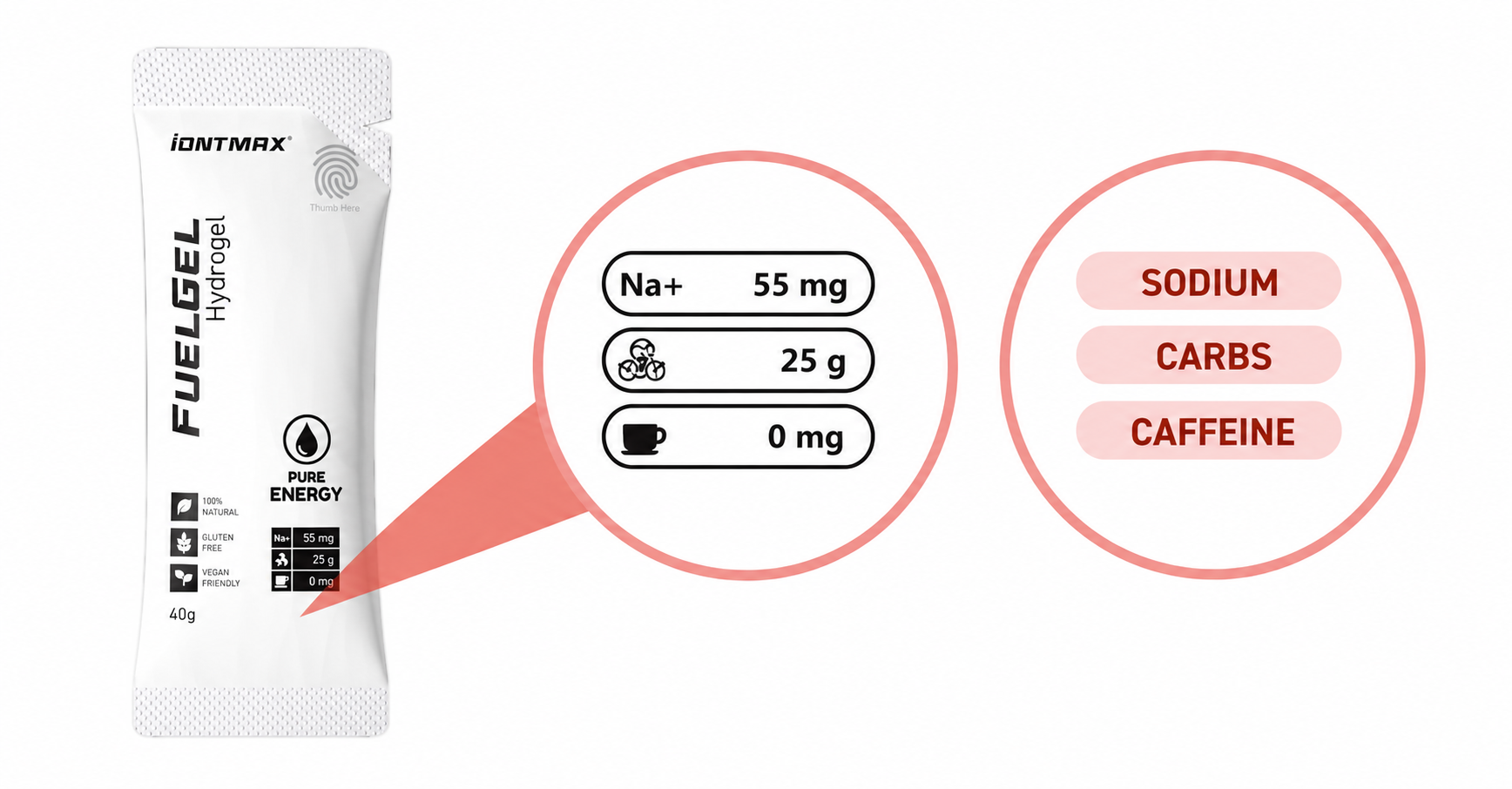
FuelGel example:
FuelGel contains 55 mg of sodium, 25 g of carbohydrates and 0 mg of caffeine. If your target is 75 g of carbohydrates per hour, this corresponds to 3× IONTMAX FuelGel.
On electrolyte drinks, we also clearly state the recommended amount of powder and the volume of water required to prepare one serving.
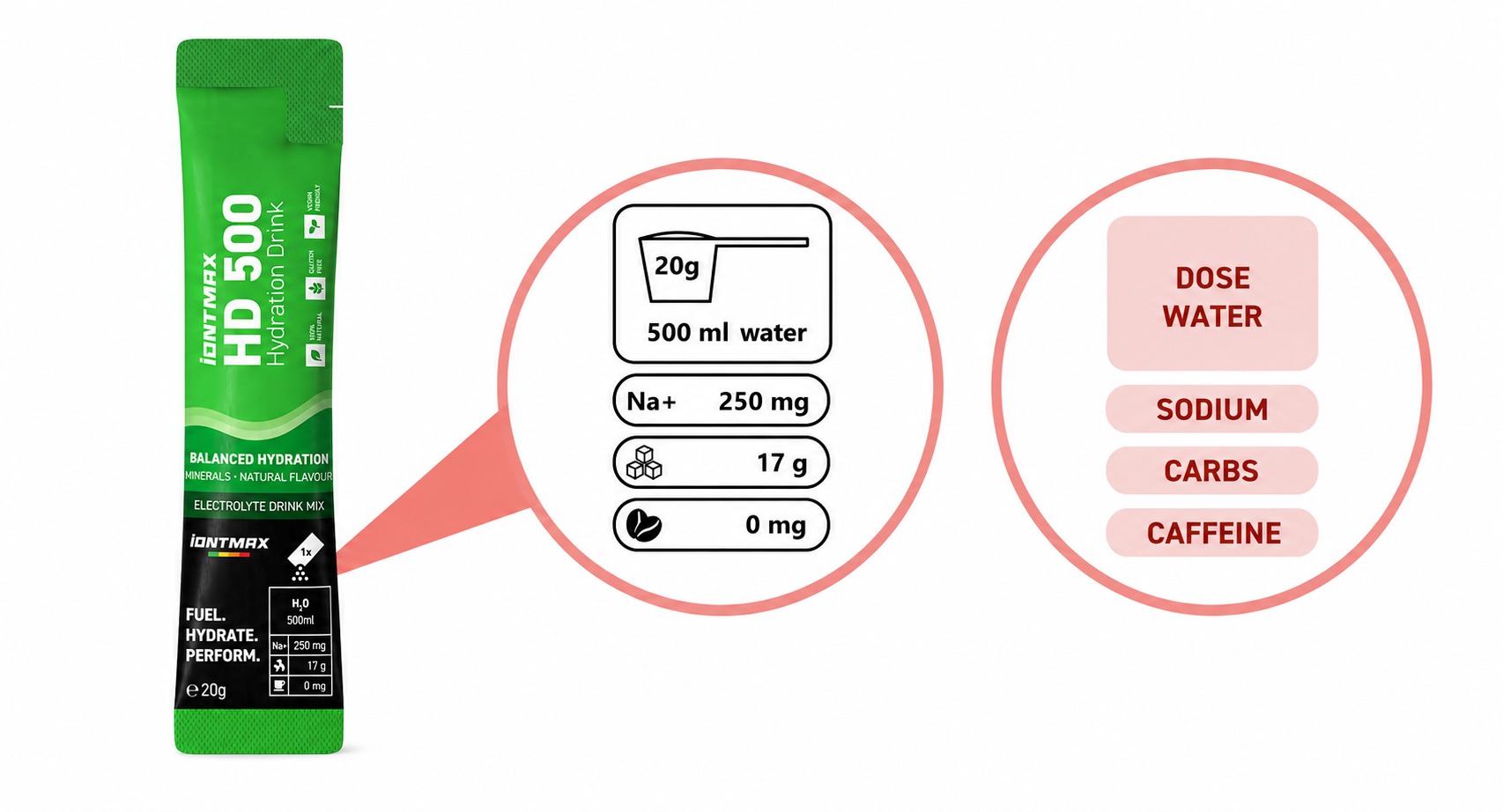
7. Adding the values correctly
The standardised symbol system makes it easy to add together the values from all products consumed within one hour. This is particularly important for carbohydrates, sodium, caffeine and total fluid intake.
0.5 litres of drink + 3× FuelGel
When planning carbohydrate intake, you must include all consumed sources. Electrolyte and carbohydrate drinks may also provide a significant amount of carbohydrates, so it is not correct to count gels alone.
8. Breakfast before a race
Every race begins before the starting line. Nutrition should be considered as a complete system that includes the entire race or training day.
It is not only about what you consume during the activity itself, but also about planning energy intake before exercise, during the event and throughout the subsequent recovery period. Nutrition in the days leading up to the race also matters.
Eat a familiar carbohydrate-rich meal that you know you tolerate well.
Race day is not the right time to test a completely new breakfast.
Pay attention to hydration before the start, especially in warm conditions.
A proven approach is to consume a carbohydrate-rich meal approximately 2 to 4 hours before exercise, such as rice, oats, bread or another well-tolerated source of carbohydrates.
Very sweet foods and drinks may cause rapid changes in blood glucose or digestive discomfort in some people. This does not mean that one specific glycaemic-index value is suitable for everyone. Individual tolerance, meal size, the time remaining before the start and previous testing during training are the most important factors.
The most important rule:
Your race-day breakfast should be familiar, well tolerated and tested in advance under training conditions.
Summary
Correct carbohydrate dosing is individual, and one identical value cannot be prescribed for every athlete. General recommendations provide a starting point that should gradually be adapted to the duration and intensity of the activity, body weight, environmental conditions and personal gastrointestinal tolerance.
There is no need to focus excessively on whether you consume exactly 65 or 70 grams of carbohydrates in a particular hour. In real-world conditions, accuracy to the nearest gram is often impossible. Consistency, starting energy intake early enough and following a tested plan are much more important.
“When you feel good, eat and drink.”
If you only start eating or drinking once you feel intense thirst, a clear drop in energy or substantial fatigue, you are often reacting too late. Regular fluid and carbohydrate intake helps prevent these situations, supports stable performance and makes subsequent recovery easier.